A portable power station can keep several useful appliances running during a power cut without using up its battery too quickly. LED lighting, phone chargers and a small radio are good starting points. An electric blanket or heated throw can also provide personal warmth using much less power than a typical room heater.
What low wattage means
Wattage tells you how much electrical power an appliance needs while it is working. For this guide, appliances using roughly 100W or less are the main focus, with some higher-powered options included where they can be useful. There is no single definition of low wattage that fits every appliance.
Check the label or manual for your particular model. A small appliance is not always a low wattage appliance, and an energy-efficient fridge can still need a substantial burst of power when its compressor starts.
Useful appliances and approximate wattages
These are approximate planning ranges, not verified ratings for every product. Check your model’s label and measure its draw if possible.
| Appliance | Approximate power | What to check |
|---|---|---|
| LED table lamp | 3–10W | A modest lamp; brightness and model matter |
| USB lantern or torch charging | 2–10W | Charging draw, not light output |
| Phone charging | 5–30W | Fast charging may be higher |
| Small radio | 2–10W | Battery-powered models are another option |
| Router and fibre terminal together | 10–25W | External network must also be working |
| Small USB or desk fan | 3–30W | Larger fans may use more |
| Small LED television | 25–60W | Size, brightness and picture affect draw |
| Laptop | 30–100W | Gaming and powerful models can exceed this |
| Electric underblanket | 40–100W per control | Check total wattage for both sides |
| Heated throw | 100–160W | Some models fall outside this range |
LED lamps and rechargeable torches
A modest LED table lamp can make a room much easier to use while drawing only a few watts. Choose enough light to read, prepare food and move around safely. One well-placed lamp is often more useful than several dim lights scattered around the house.
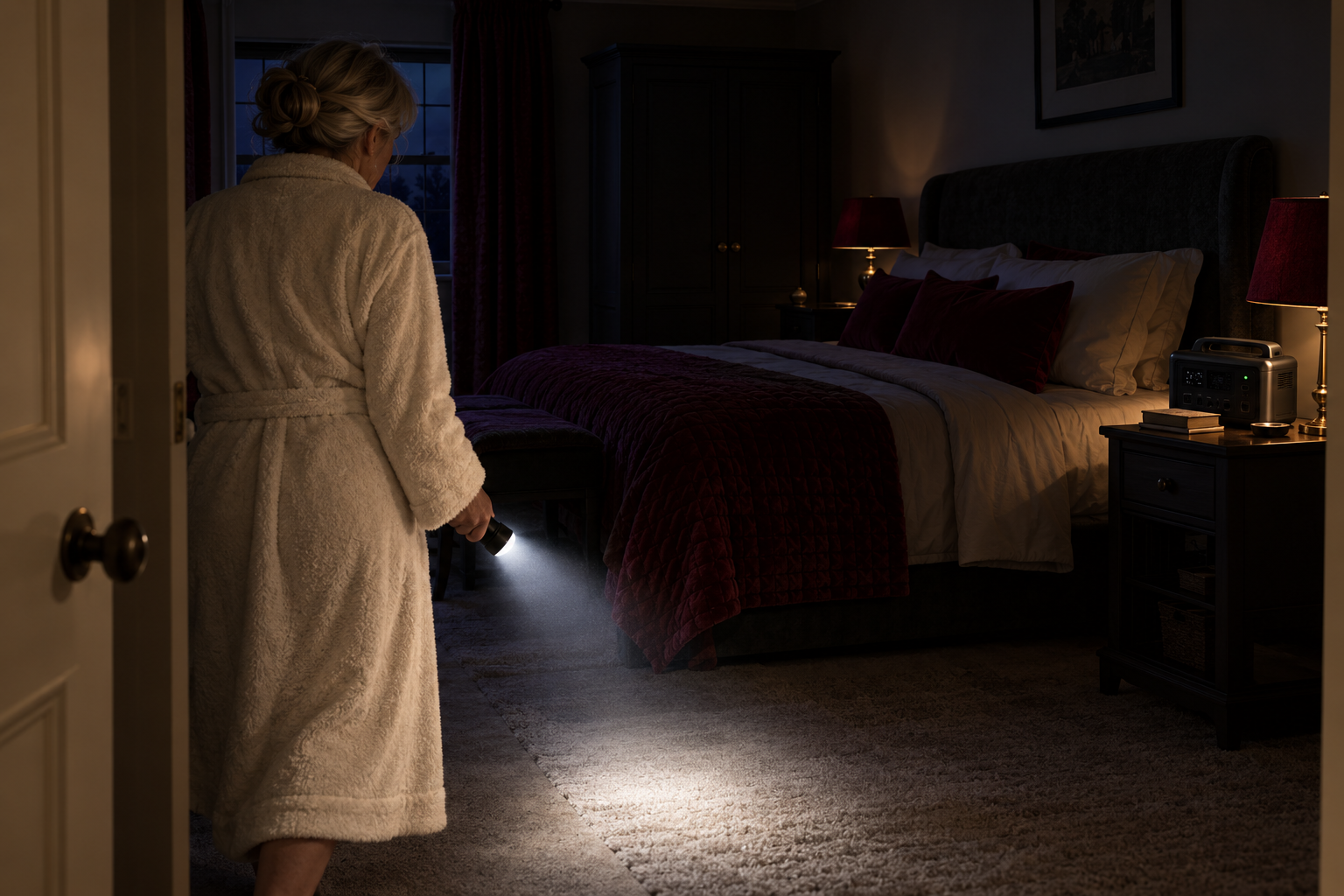
Keep a charged torch beside the bed and another where you can find it downstairs. Rechargeable torches and lanterns can usually be topped up from a compatible USB port on the station. Their charging wattage is different from their power use while lighting the room.
Phones tablets and a small radio
A charged phone helps you contact family and check power-cut updates, provided the mobile network is working. A small radio gives you another way to hear news and local information. A battery radio also works without using the station at all.
Use the station’s USB ports for compatible devices when possible. This can avoid the extra energy used by its mains inverter, which converts battery electricity into household AC electricity. Choose the correct cable and charging standard, and remember that fast charging may temporarily draw more power.
Wi Fi and television
A router and, for some fibre connections, a separate optical network terminal can be relatively modest loads. Both may need backup power. Keeping them switched on will only preserve internet access if the provider’s network outside your home is still operating.
A smaller LED television may also be manageable. Check its actual consumption, reduce brightness if comfortable and switch it off when nobody is watching. A laptop can use more power when charging or doing demanding work than when simply reading a webpage.
Is an electric blanket low wattage
Yes, many electric blankets are relatively low wattage compared with room heaters. Models vary: an underblanket may be around 40–100W per control, while some heated throws are around 100–160W. Check whether a dual-control blanket’s stated figure applies to one side or the whole blanket.
As a specific example, Dreamland lists its Snuggle Up Electric Warming Throw at 150W. A 150W throw needs one tenth of the power of a 1,500W room heater while both are drawing their rated power. The throw warms the person using it; it will not heat the whole room.
The controller may cycle the heating on and off once the desired temperature is reached, so average energy use can be lower than the rated maximum. Plan conservatively until you have measured your own blanket and setting.
For bedtime, warming the bed beforehand and then switching the blanket off can conserve battery energy. Only leave it on while sleeping if the manufacturer expressly permits overnight use and you follow the required settings. A timer alone does not establish that it is suitable for sleeping under.
Use a blanket in good condition and follow its instructions about positioning and bedding. Do not use it wet, creased or tightly folded. London Fire Brigade advises against using electric blankets with airflow pressure-relief mattresses or emollient creams, and against using a hot water bottle at the same time.
Small fans and other modest loads
A small USB or desk fan can provide welcome airflow during a warm-weather power cut. It often uses considerably less power than air conditioning. A compatible rechargeable shaver or toothbrush can also be charged if needed, though these are usually lower priorities than lighting and communication.
Do not assume that a low-powered medical device is covered by this general advice. If you depend on powered medical equipment, arrange a suitable backup with the equipment provider.
What about kettles and toasters
A kettle rated around 700–1,000W may be easier for a portable station to run than a normal 2,000–3,000W kitchen kettle. It is still a large load compared with a lamp or phone charger. A toaster can also draw several hundred watts or more; check its label rather than its size.
A lower wattage kettle usually heats the same quantity of water more slowly. It does not automatically save much battery energy per boil. Boil only what you need, while respecting the minimum fill line, and use an insulated flask if you want to keep hot water for later.
Use high-demand appliances one at a time and leave enough battery for your priorities. Fridges and freezers need separate planning because compressor starting power and cycling make them different from steady low wattage loads.
How long will the battery last
Multiply watts by hours to estimate appliance energy in watt-hours, written Wh. A 10W lamp used for five hours consumes about 50Wh. A blanket drawing 100W continuously for four hours consumes about 400Wh.
Suppose a fully charged 500Wh station delivers 80% of its labelled capacity after conversion losses and a planning allowance. That gives 400Wh. A steady combined load of 50W would then run for about eight hours: 400 ÷ 50. This is an illustration, not a promised runtime.
For a mixed evening example, a 5W lamp for five hours uses 25Wh, a router setup averaging 15W for five hours uses 75Wh, a 100W blanket drawing continuously for two hours uses 200Wh, and phone charging is allowed 15Wh. Together that is 315Wh before the station’s own energy use and conversion losses.
Actual runtime depends on charge level, battery condition, temperature, inverter overhead and how appliances behave. Very small AC loads can be disproportionately affected by inverter overhead. Check the station’s display during a supervised trial and keep a reserve.
Match the appliances to the power station
Check both the battery capacity in Wh and the continuous output in W. Add up appliances used together and stay within the station’s total output and individual port limits. For UK mains appliances, use the voltage, frequency and output type their manufacturers require; a suitable 230V pure sine wave AC outlet is the usual choice.
Check any automatic timeout or energy-saving setting. Some stations switch off an output after a period without a detected load, which can interrupt a small appliance or a blanket that cycles off. Follow the station’s manual and test the arrangement before relying on it.
Keep the station dry, on a stable surface with clear ventilation, away from bedding, curtains and kettle steam. Route cables out of walkways. Connect appliances directly through suitable leads and never plug the station’s output into a household wall socket to feed your home’s wiring.
A practical starting kit
For a simple home setup, start with a rechargeable torch, one or two LED lamps, phone charging and a small radio. Add a suitable electric blanket or heated throw if personal warmth matters, then consider a router, small television or fan according to your needs.
Try the appliances together while mains power is available. Note their combined draw and how quickly the battery falls. That gives you a much clearer idea of what your station can do when the lights go out.